
It’s hard to believe that it has been two years since my last blog post where I longingly wished for my husband to be given a kidney transplant for Christmas. I am happy to return with an update.
On the night of April 16th, 2024, my husband and I packed a bag, took the kids to grandma’s and drove the twenty-minute drive to downtown Sacramento. The skies were clear and dark, the air was lukewarm, and the streets were busy minus a few cars buzzing their drivers home in time for dinner.
The light orange streetlights lined the freeway as we made our way off the exit and into the UC Davis hospital parking garage. We were nervous, but it was an excited kind of nervous. The kind where your heart is beating fast because you’re afraid, yet you have a smile on your face and you just can’t wait to get to where you’re going. The kind where you have no idea what is going to happen, yet you know that whatever does happen is going to be a good thing.
We got all checked in, I went with my husband upstairs to his hospital room and sat next to him, holding his hand while we anxiously waited for him to get into the operating room. Our legs jiggled in silence while I mentally checked off every to-do list item we had been given. After being diagnosed with renal failure nine years prior, it was finally time for my husband to receive his kidney transplant.
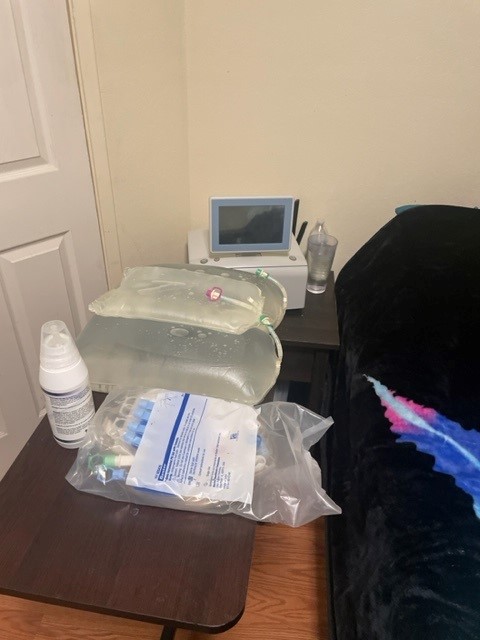
Being the wife of a chronically ill husband requires a level of care that involves managing doctor appointments, prescriptions and supplementation of daily tasks that an otherwise healthy man would be able to do on his own. Being the wife of a husband on dialysis requires management of daily supplies, heavy lifting, sanitization and being fully present every day with no days off.
But being the wife of a kidney transplant recipient is another level of different. I went from watching my husband transform from a lively man to a tired man, trudging towards the finish line of the journey to his surgery. We always talked about his surgery. When it would happen, if it would take, what life would be like afterwards. But I could see that towards the end, he was just getting tired.
After he received the transplant, I watched him wince in pain as he took gradual baby steps for only five minutes at a time a few times a day. I took weeks off of work to help care for him. I helped him dress, took him to weekly appointments, made all of his meals for him in bed, resumed all of the household responsibilities. And I mean all of the responsibilities: kids, meals, cleaning, shopping, yardwork.
But aside from all of that, I experienced the emotional rollercoaster of not knowing if my husband was going to be okay, but trusting that he had to be okay because I could not fathom another outcome. I experienced the relief and sense of pride after standing by his side and holding his hand through his life obstacles. There were times where he walked our life journey a little slower than I had liked to. There were times when I believed his family doubted if I was really advocating as hard as I said I was for his transplantation to occur.
I know now that there is not a single doubt sitting in any place of his or his family members’ body when it comes to my love for him.
Loving someone is not just about the good times, what they can do for you or how the “love” makes you feel. Being in love means something different for every person that experiences it. And we can dive deep into philosophical perspectives and viewpoints of various psychologists, analyzing the way one’s childhood experiences or relationships with their parents might impact one’s understanding of love–but I am not here to do that. I will speak from my own tarnished life experience.
Being in love is wanting the best possible outcome for that other person. It is praying for their safety, it is doing something that will help them not because you want to, but because you have empathy towards them and you’d want the same to be done for you. Being in love is encouraging them to keep climbing life’s mountain and pitching the tent for them when they just cannot walk any further. It’s staying in that tent with them until they’re ready to carry on. It’s hunting for food while you wait in said tent and making a fire so that the two of you stay warm, all the while, not hounding the other person for not helping because you are the one who’s able to, in that moment, carry the both of you forward.
Being in love is cheering them on and congratulating them once they’re able to stand again. It’s not asking them to help you clean up or put the tent away, but praising them for doing their best and for not giving up! It’s walking slower up that mountain even if you’re ready and able to run across to the other side. Being in love is taking your time so that the two of you could hold hands and experience the beautiful oasis that exists on the other side of the mountain. “If you want to travel fast go alone. But if you want to travel far, go together” – African Proverb.
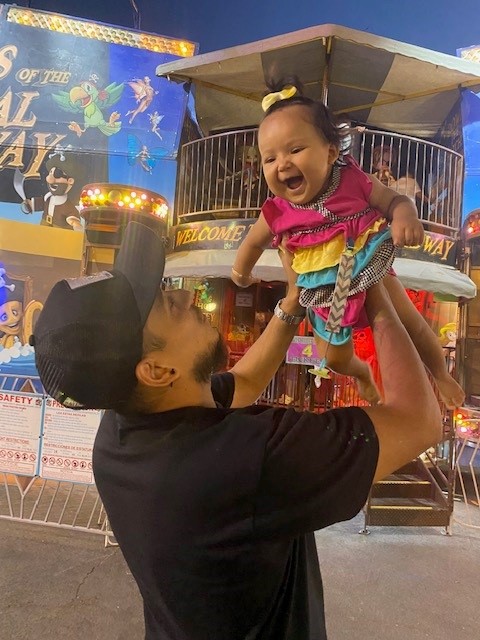
Today, my husband is healthy. He has been fully back at work for the past five months, he consumes a vegetarian diet, and we exercise together on a regular basis. We have a cruise planned next year in May. It will be our first vacation together in seven years. We made it! And it’s all thanks to God and the people involved: my sister-in-law, a selfless anonymous donor from the East Coast, Kaiser Permanente, UC Davis, the team at Wellbound Kidney, my husband’s nephrologist and surgeon, and my mother and father-in-law who gave us the biggest amount of support during this entire transition. Amen!


 Montelongo Writing